
BreakingLocal
CPRA Documents Raise Questions About Possible Brown Act Compliance in Cerritos
A CPRA disclosure has sparked public debate in Cerritos after records appeared to show a private group text involving council members during water rate discussions.
📌 Key Takeaways
- A CPRA disclosure has sparked public debate in Cerritos after records appeared to show a private group text involving council members during water rate discussions.
- At this time, no court has determined that a Brown Act violation occurred.
- However, residents continue to call for more disclosure so the public can better understand the context of the communications.
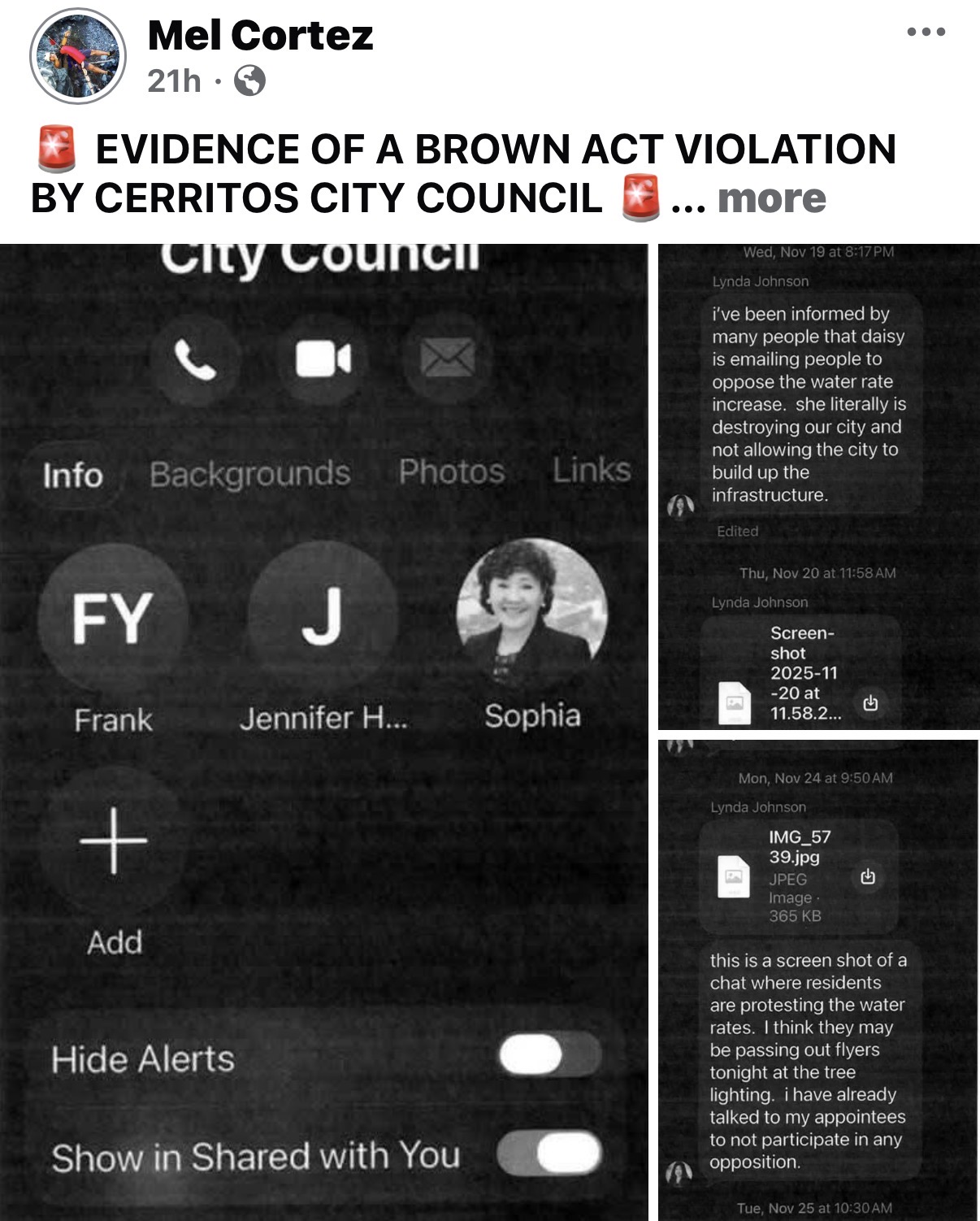
CERRITOS, Calif. - A public records disclosure obtained through a California Public Records Act request has sparked controversy in Cerritos after documents appeared to show members of the Cerritos City Council participating in a private group text labeled "City Council."
The communications have drawn public attention because they surfaced during ongoing debate over water and sewer rate increases in Cerritos.
What This Means for Our Community
The controversy is important for residents beyond Cerritos because it highlights how public trust can be affected when major policy decisions are surrounded by questions about transparency.
For Artesia and neighboring communities, the issue serves as a reminder that local government decisions about infrastructure, fees, and public services should be handled with clear communication and full public participation.
At this time, no court has determined that a Brown Act violation occurred. However, residents continue to call for more disclosure so the public can better understand the context of the communications.
What Happened
The documents were first highlighted publicly by Cerritos resident, teacher, and community activist Mel Cortez, who has questioned whether the communications may have violated California's Brown Act.
According to records reviewed and discussed by residents, a private iMessage group reportedly titled "City Council" included Councilmembers Lynda Johnson, Frank Yokoyama, Jennifer Hong, and Sophia Tse.
Messages appearing in the disclosed records reference public opposition to proposed water rate increases and discussions involving community members advocating against the increases.
One message attributed to Councilmember Johnson states that she had spoken to her appointees and instructed them not to participate in opposition efforts related to the issue.
Additional records appear to indicate that council members were aware of residents distributing protest flyers at city events.
According to records reviewed and discussed by residents, a private iMessage group reportedly titled "City Council" included Councilmembers Lynda Johnson, Frank Yokoyama, Jennifer Hong, and Sophia Tse.
Messages appearing in the disclosed records reference public opposition to proposed water rate increases and discussions involving community members advocating against the increases.
One message attributed to Councilmember Johnson states that she had spoken to her appointees and instructed them not to participate in opposition efforts related to the issue.
Additional records appear to indicate that council members were aware of residents distributing protest flyers at city events.
Background
California's Brown Act generally prohibits a majority of a legislative body from discussing, deliberating, or taking action on matters within the body's jurisdiction outside of properly noticed public meetings.
Whether a violation occurred depends on several facts, including whether a majority participated, whether city business was discussed, whether any consensus was formed, and whether any legal exceptions apply.
Questions have also been raised regarding redactions contained within the released records. Some residents argue that the redacted material may conceal additional participation by council members, while others note that the released records alone may not provide the complete context of the conversation.
Could This Be Investigated?
Potential Brown Act concerns may be reviewed by several entities, including the Los Angeles County District Attorney's Office, the California Attorney General's Office, citizens through civil legal action, or courts determining whether public actions should be corrected or invalidated.
At the time of publication, no court has determined that a Brown Act violation occurred, and no public announcement of a criminal investigation has been made.
Questions Being Raised
The disclosure has generated several questions among residents:
Was a legal quorum participating in the discussion?
Did the communications constitute deliberations under the Brown Act?
Were public opposition efforts being monitored or coordinated?
Are additional messages still unreleased?
Should the full conversation be publicly disclosed?
What's Next
Several residents are now calling for the release of the complete, unredacted conversation so the public can better understand the context of the communications.
Artesia Newspaper will continue to monitor developments and will provide updates should city officials, legal authorities, or council members respond to the allegations.
Frequently Asked Questions
What is "CPRA Documents Raise Questions About Possible Brown Act Compliance in Cerritos" about?
A CPRA disclosure has sparked public debate in Cerritos after records appeared to show a private group text involving council members during water rate discussions.
Why does this matter to Artesia and Cerritos residents?
For Artesia and neighboring communities, the issue serves as a reminder that local government decisions about infrastructure, fees, and public services should be handled with clear communication and full public participation.
Where can I read more local news like this?
Visit Artesia Newspaper at https://artesianewspaper.com for the latest Artesia, Cerritos and Los Angeles County coverage.